

An external facade cleaning method statement should explain exactly what will be cleaned, how technicians will reach it, which products and tools will be used, how people and property will be protected, and what will happen if conditions change. A generic document that could apply to any building is not enough for high-rise work.
For a building manager, the quick test is practical: can the document help you picture the work from setup to handover? If the answer is no, request clarification before approving the programme.
What Is an External Facade Cleaning Method Statement?
A method statement is the contractor’s written sequence for carrying out the work. It translates the agreed scope, site survey, access design and risk controls into a process the site team can follow. It should be read together with the risk assessment, drawings, product information and permit requirements.
The external facade cleaning method statement is not a sales brochure. It should identify the building, elevations, surface types, work limits, team responsibilities, equipment, cleaning procedure, testing, exclusion zones, weather limits, emergency arrangements and completion records.
Why a Building-Specific Method Matters
Two towers of similar height can require very different methods. One may have a permanent gondola and open plaza; another may have rope-access anchors above a busy entrance. Glass, aluminium, stone, painted concrete and ACP respond differently to water, agitation and cleaning agents.
Malaysia adds intense sunlight, frequent rain, humidity, traffic residue and organic growth to the planning picture. These conditions influence test areas, drying, runoff, weather monitoring and the order in which elevations are cleaned. The method must match what is actually on site.
9 Critical Checks Before Approval
1. Scope and elevation boundaries
The external facade cleaning method statement should state which blocks, elevations, levels and architectural features are included. Clarify whether the scope covers glass only or also mullions, spandrels, fins, louvres, canopies, signage and painted walls. Identify exclusions such as inaccessible recesses or surfaces awaiting repair.
An external facade cleaning method statement benefits from marked-up elevation photographs. They reduce disagreement over phrases such as “front façade” and show where access changes, sensitive finishes or public routes need special treatment.
2. Surface identification and condition
The contractor should record the materials and visible condition before cleaning. Cracked glass, loose sealant, peeling paint, open joints, corroded fixings and unstable panels are not ordinary dirt. Cleaning may need to stop around these areas until the responsible building team decides how to proceed.
Ask who confirms the material when it is uncertain. A finish that looks like bare aluminium may be coated; natural stone may have previous sealers; tinted glass may contain films or treatments. Surface assumptions should not be hidden in the procedure.
3. Access system and rescue planning
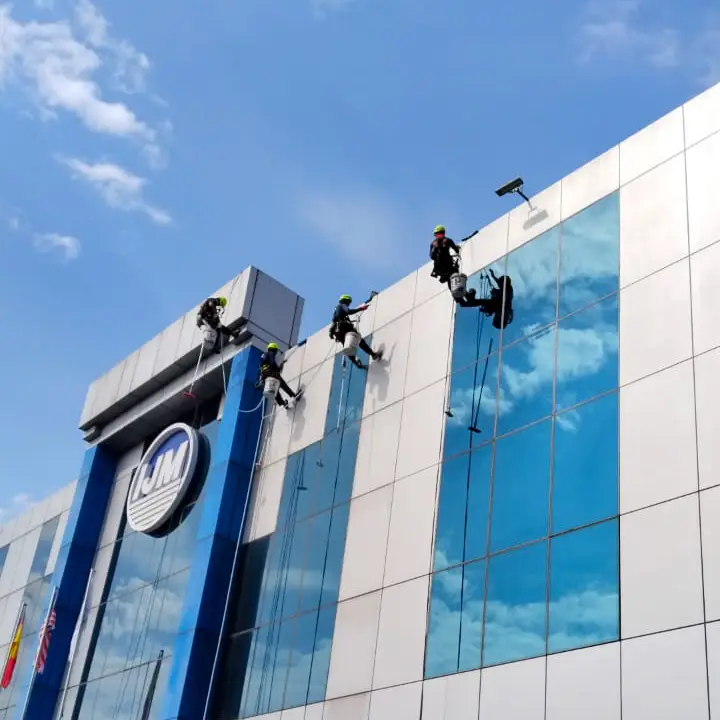
The external facade cleaning method statement should identify whether the team will use a gondola, mobile elevating work platform, scaffold, water-fed pole or rope access services. It should explain access to the setup point, inspection of equipment, work positioning and recovery of a technician if normal access is unavailable.
Height alone does not choose the system. Anchor locations, façade shape, ground bearing, machine reach, roof access, pendulum risk, overhead obstacles and the space available below all matter.
4. Public and property protection
Entrances, walkways, roads, tenant areas, parked vehicles, landscaping and neighbouring property may sit below the work. The external facade cleaning method statement should show barriers, spotters, overhead protection or temporary diversion where required. It should also address controlled tools, hoses, squeegees and small components.
Malaysia’s Department of Occupational Safety and Health provides official guidance on preventing falls at workplaces. Site controls should reflect the actual work area and selected access system.
5. Cleaning products, tools and test areas
No cleaner is suitable for every façade. The external facade cleaning method statement should list the product or product type, dilution where relevant, application method, dwell time, agitation tool and rinse procedure. Safety data sheets and product instructions should be available to the team.
The external facade cleaning method statement should identify a representative test area and the person who approves it. Check the surface after drying. A wet area can temporarily hide haze, streaks, colour change or uneven removal.
6. Water, runoff and environmental control
State where water comes from, how hoses are routed and how runoff is kept away from entrances, electrical equipment, tenant goods, ponds and sensitive landscaping. If wastewater needs collection or special handling, the method must describe it.
High pressure should not be assumed. Excessive pressure can drive water into open joints, lift weak coatings or damage seals. The suitable pressure, distance and nozzle follow the substrate, contamination and test result.
7. Weather limits and stop-work rules
Rain, lightning, strong wind and intense heat can change both access safety and cleaning results. The external facade cleaning method statement should define who monitors conditions, who may stop work and how incomplete areas are secured. It should also explain how work resumes after a weather interruption.
A workable external facade cleaning method statement avoids fixed promises that ignore weather. It gives the building team a sequence and communication plan for delayed or partially completed elevations.
8. Occupant communication and building operations
Tenants may need to close windows, remove items from balconies or protect sensitive operations. Security may need technician names and roof access. Loading bays, hotel entrances and office arrival periods may require restricted working hours.
The external facade cleaning method statement should state who sends notices, how much lead time is required and what happens if occupants do not comply. A simple communication matrix prevents technicians from waiting at a locked roof or cleaning beside an open window.
9. Inspection, reporting and handover
The external facade cleaning method statement should distinguish removable dirt from permanent staining, coating deterioration and defects requiring repair. The external facade cleaning method statement should define who inspects the work, how touch-ups are agreed and which photographs or records are supplied.
Defect notes are useful when they describe the location and visible condition without making unsupported structural conclusions. A photograph marked with block, elevation and level is more actionable than “sealant damaged somewhere on façade”.
Facade Material and Cleaning Risk Table
| Material | Common contamination | Planning concern |
|---|---|---|
| Glass | Traffic film, water marks, mineral residue and construction dust | Scratching, coating compatibility, seal condition and streaking |
| Aluminium or coated metal | Dust, oxidation marks and runoff streaks | Chalking, colour change and damage to protective finishes |
| ACP | Atmospheric dirt, algae and joint staining | Panel coating, sealant edges and water entry at joints |
| Painted concrete | Organic growth, dust and rain streaks | Weak paint, cracks and uneven pressure marks |
| Natural stone | Dark staining, salts and biological growth | Porosity, previous treatment and incompatible acids |
| Louvres and fins | Dust, bird residue and deposits in recesses | Sharp edges, hidden contamination and difficult rinsing |
This table supports the survey; it does not replace testing. The same material can respond differently because of age, coating, exposure and previous maintenance.
Access Method Comparison
| Access method | May suit | Key checks |
|---|---|---|
| Water-fed pole | Reachable lower-level glass with suitable ground position | Reach, control, water quality and public separation |
| Mobile platform | Buildings with firm ground access and suitable reach geometry | Ground bearing, delivery, outriggers, obstacles and exclusion zone |
| Gondola | Façades served by an available building-maintenance unit | Inspection status, reach, operating procedure and rescue plan |
| Rope access | High or complex elevations with suitable anchors and rope paths | Anchors, edges, deviation, dropped objects and rescue |
| Scaffold | Extensive work or combined cleaning and repair | Footprint, erection, inspection, public access and duration |
The contractor may combine methods. The external facade cleaning method statement should explain where each method begins and ends so no elevation is missed.
A Practical Cleaning Sequence
- Pre-start briefing: confirm permits, weather, communication, access equipment and work-zone controls.
- Condition photographs: record cracks, weak coatings, open windows and nearby property before wet work.
- Test area: apply the proposed method to a representative section and review it after drying.
- Set the exclusion zone: protect people, vehicles, entrances, equipment and landscaping.
- Clean in an agreed order: usually work systematically to manage runoff and avoid re-soiling completed areas.
- Rinse and detail: remove remaining solution, check edges and deal with local streaking using the approved method.
- Inspect and report: compare the completed area with the agreed standard and document defects separately.
The actual sequence may change for a specific façade. The purpose is to show that setup, testing, protection and inspection are part of the work—not afterthoughts added to “wash the building”.
Method Statement, Risk Assessment and Permit
These documents serve different purposes. The method statement describes how the task will be completed. The risk assessment identifies hazards, evaluates risk and records controls. A permit confirms that defined site conditions and authorisations are in place for a particular activity or period.
They should agree with one another. If the external facade cleaning method statement says rope access but the risk assessment refers only to a mobile platform, the package needs correction. Product sheets, equipment records and rescue plans should also match the selected method.
Building Manager Approval Checklist
- Building name, block and elevations are correct.
- Included and excluded surfaces are clear.
- Facade materials and visible defects are recorded.
- Access equipment and rescue arrangements match the site.
- Cleaning products, tools and test area are identified.
- Runoff, windows, landscaping and electrical items are protected.
- Weather limits and stop-work authority are stated.
- Tenant notices, permits and security access are assigned.
- Completion standard, photographs and defect reporting are defined.
Common Weaknesses to Send Back for Revision
Generic wording. Phrases such as “use suitable equipment” should be replaced with the actual equipment and checks for this building.
No test area. Without a test, the client cannot confirm appearance or surface compatibility before the full elevation begins.
No water-control plan. Hoses, runoff and open windows can affect occupied areas even when the access work is safe.
Unclear rescue wording. “Call emergency services” does not explain immediate recovery from the work position. The selected access system needs a practical rescue arrangement.
No reporting standard. The external facade cleaning method statement should say what completion photographs and defect notes the client receives.
What Affects Project Duration and Cost?
Price and programme depend on façade area, height, geometry, access system, material, contamination, test results, water supply, public protection, working hours, weather, tenant restrictions and reporting requirements. Heavy staining or sensitive materials may require slower trials and local treatment.
For comparable quotations, issue the same scope photographs and deliverables to each bidder. Avoid requesting an exact rate from height alone. A site assessment produces a more useful basis for planning.
Pre-Start Coordination Matrix
A short coordination table turns responsibilities into actions. Add names and contact details before issuing the final external facade cleaning method statement; job titles alone are less useful during a weather delay or access problem.
| Item | Typical responsible party | Confirmation needed |
|---|---|---|
| Roof or plant-room access | Building management or security | Keys, escort, time and restricted zones |
| Tenant notification | Property management | Dates, window closure and balcony instructions |
| Water point | Building engineering team | Location, pressure, connection and operating hours |
| Work-at-height setup | Cleaning contractor | Equipment, inspection, anchors and rescue |
| Ground exclusion zone | Contractor with building security | Barriers, diversion, spotters and reopening |
| Test-area approval | Named client representative | Location, dry result and accepted standard |
| Defect escalation | Building manager or consultant | Contact, photograph format and stop-work decision |
The table should reflect the building’s actual management structure. For a hotel, guest relations may need to join the plan. At an industrial property, production or permit teams may control the available work window.
How to Record Daily Progress
A simple daily record supports the external facade cleaning method statement and gives both parties a shared picture of progress. Record the date, weather, team, access system, elevation, levels completed, product used, test-area reference, delays and defects observed.
Photographs should include a wide view for location and a close view for detail. Use consistent labels such as “Block A, east elevation, level 18”. This is particularly important where identical curtain-wall bays make a defect difficult to find from inside.
If the team changes the sequence or cleaning method, note who authorised the change and why. A short factual record is better than editing the document after the event without explaining the difference.
Managing Variations Without Losing Control
Site conditions sometimes differ from survey photographs. A previously hidden coating may react in the test area, a roof zone may be unavailable, or an open joint may make wet cleaning unsuitable. The external facade cleaning method statement should include a process for pausing, documenting and approving a revised approach.
- Describe the changed condition and exact location.
- Record photographs before additional work.
- Assess whether the risk assessment and access plan also need revision.
- Confirm cost or programme effects before proceeding where practicable.
- Brief the site team on the approved change.
- Include the change in handover records.
This does not mean every small operational choice requires a new document. It means material changes to surface treatment, access, protection or scope should be visible and agreed instead of being buried in an informal message.
Before mobilisation, issue the approved external facade cleaning method statement to the building representative, supervisor and technicians. Confirm that the revision number on site matches the approved copy, especially when survey findings or working hours changed during planning.
Frequently Asked Questions
Who should prepare the external facade cleaning method statement?
The contractor responsible for the work should prepare it using information from the site survey and agreed scope. Building management then reviews it against site requirements and other project documents.
Does every façade need a chemical cleaner?
No. The least aggressive effective method should be selected after identifying the surface and contamination. Some areas may respond to controlled water and agitation; others need a compatible product and test area.
Can high-pressure water be used on ACP or sealant joints?
It should not be assumed. Excess pressure or the wrong angle can affect weak coatings, joints and water entry. The contractor should test and specify pressure, distance and nozzle for the actual condition.
How detailed should weather limits be?
They should be practical for the access system, products and building. The document should identify monitoring, stop-work authority and the process for securing and resuming work.
Does façade cleaning include repair?
Not automatically. Sealant replacement, coating repair, crack treatment and panel work should be separately defined. Cleaning may reveal defects, but it does not turn them into an included repair scope.
Can work continue while the building is occupied?
Often yes, with suitable access control, tenant notices, window management and scheduling. The external facade cleaning method statement should explain how the occupied areas remain protected.
How often should a facade be cleaned in Malaysia?
There is no universal interval. Location, traffic pollution, rainfall, shade, construction activity, material and appearance standards affect frequency. Use visual condition and a planned maintenance review to set the schedule.
Request a Site Assessment
Vertical Pro Sdn Bhd provides external facade cleaning services for managed, commercial and industrial properties in Malaysia. The team can review materials, access, operating constraints and the information needed for a site-specific proposal.
For an assessment, contact Vertical Pro with the property location, approximate height, façade photographs and current concerns. The final external facade cleaning method statement should be prepared for the approved scope and actual site conditions.